|
|
|
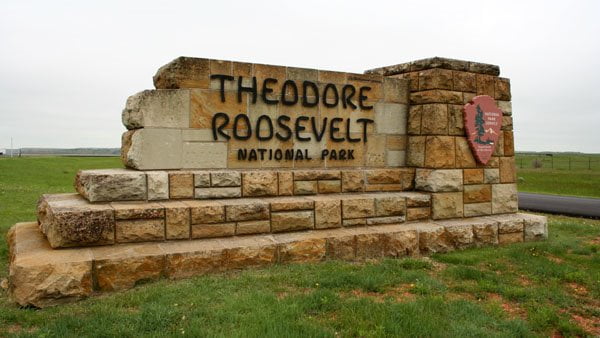
Hiking in Theodore Roosevelt National Park can be a fun and rewarding experience as in other national parks. It is a great way to both see and experience the park.
A major feature of the South Unit are its hiking trails. Here are the trails in the South Unit: Coal Vein Nature Trail; Jones Creek Trail; Lone Tree Trail; Paddock Creek Trail; Painted Canyon Trail; Petrified Forest Trail; Ridgeline Nature Trail; and Talkington Trail. Connecting with the North and South Unit is the Maah-Daah-Hey trail which is under construction and scheduled for completion the fall of 1998.
As you go along the drive of the North Unit, you will come to a number of trail heads. Some are self-guiding nature trails. The descriptions will give you an idea of what to expect. Any trail will help you gain an understanding of this land and its wildlife, so get out of your car and go for a hike, whether it be a short one or a long one. Take time to get to know the park. North Unit trails are: Achenback Trail; Buckhorn Trail; Caprock Coulee Nature Trail; Little Mo Nature Trail; North Achenback Trail; Upper Caprock Coulee Trail; and Prairie Dog Town Trail.
![]() |
| Trail | Miles | Description |
| Buck Hill | Short walk | This short walk leads to this hill, which has an elevation of 2,855 feet. Note that only shrubs and other small plants grow on the dry, hot, south-facing slopes, and that trees grow on the wetter, cooler, north-facing hillsides. |
| Coal Vein | 0.80 | From 1951 until early 1977 a fire burned here in a coal seam. The intense heat baked the adjacent clay and sand, greatly altering the appearance of the terrain and disturbing the vegetation. |
| Jones Creek | 3.7 | This trail that leads through the heart of the badlands reaches the road at two points. It may be hiked from either end. Length: 3.7 miles. The trail crosses the creek twice. The creek is usually dry, but may contain water and mud following snowmelt as well as spring and summer thunderstorms. The trail is relatively flat with buttes on either side. There are two trailheads |
| Lone Tree from East | 10.5 | Round Trip |
| Lone Tree from West | 13.3 | Round Trip |
| Lower Paddock Creek | 4.4 | This trail can be accessed from the road at two points and may be hiked from either end. The trail crosses the creek numerous times. The creek is usually dry, but may contain water and mud following snowmelt as well as spring and summer thunderstorms. The trail passes through a few prairie dog towns. |
| Lower Talkington | 4.1 | This trail can be accessed from the park loop drive at mile 18.5. There is a junction with a trail that leads to lower Paddock Creek Trail. The trail is a moderate to strenuous trail that covers a rugged section of the park. Hiking this trail involves numerous creek and wash crossings that are usually dry, but may contain mud and water at any time of year, particularly after spring snowmelt and rains, and after summer and fall thunderstorms and rains. The terrain along this trail varies from flat to gently sloping to moderately steep near creek crossings |
| Painted Canyon | 2.0 | The trail starts at the Painted Canyon Visitor Center and ends at Upper Paddock Creek Trail intersection. Walk east on service road from Painted Canyon Visitor Center and you will see trail markers heading off towards the canyon. The Painted Canyon Trail is a very steep trail that leads down the canyon wall. |
| Petrified Forest - from East | 15.3 | The greatest collection of petrified wood in the park can be reach only by foot or on horseback. Besides the petrified wood here, pieces may be found scattered throughout the park, though not in such great quantity. |
| Petrified Forest - from West | 10.7 | The greatest collection of petrified wood in the park can be reach only by foot or on horseback. Besides the petrified wood here, pieces may be found scattered throughout the park, though not in such great quantity. |
| Ridgeline | 0.6 | This self-guiding loop trail gives you information about the badlands scenery and ecology and about the role of fire, wind, and water in this area. |
| Skyline Vista | 0.25 | Handicap accessible |
| Upper Paddock Creek | 7.7 | a moderate trail that follows Paddock Creek outside of the loop road. The trail crosses the creek many times. The creek is usually dry but may contain water and mud following snowmelt and spring and summer thunderstorms. The trail intersects the Painted Canyon trail that leads to the visitor center on I-94 and then continues to the southeast corner of the park. Here the trail leads north and intersects Upper Talkington Trail. The trail is relatively flat with some short inclines and buttes on either side. |
| Upper Talkington | 4.0 | The trail is a moderate trail that follows a flat area from near the park's east boundary to the loop road. The trail crosses a creek twice within the first 1.5 miles from the loop road trailhead. These creeks are usually dry, but may contain mud and water following spring snowmelt and rains as well as summer and fall thunderstorms and rains. The trail also leads through the edge of a large prairie dog town just below the east rim of the badlands. Once on top of the rim, the trail meets with the Upper Paddock Creek Trail. At this point, the east park boundary fence is visible. |
| Wind Canyon | 0.5 | A short trail up the ridge leads to an overlook of both a graceful bend in the Little Missouri River and also the wind-sculpted sands of the canyon. A short way beyond the river the wilderness area begins. |
![]() |
| Trail | Miles (Round Trip) | Description |
|---|---|---|
| Achenbach | 16.0 | Also beginning at North Unit Campground, this trail climbs from river bottomland up through the Achenbach Hills, drops to the river again, climbs to Oxbow Overlook along the way by a spur trail, and returns along the river bottom to the campground. Inquire about the condition of the river crossings before departing. |
| Buckhorn | 11.0 | This loop trail can be reached from the Caprock Coulee Nature Trailhead. You come to a prairie dog town about one mile from its beginning. Of the five varieties, only the black-tailed prairie dog lives within the park. Remember that prairie dogs are wild animals, that they can inflict severe bites, and that they often carry disease. Do not feed them or get too close. |
| Caprock Coulee | 4.5 | About 1.5 miles west of North Unit Juniper Campground is the start of a self-guiding trail through badlands coulees-dry water gulches-and breaks-interruptions in the grassy plains. |
| Little Mo | 1.1 | This self-guiding nature trail, which begins at the North Unit Campground, goes through river woodlands and badlands. A shorter trail, 0.7 mile, is wheelchair accessible. |
| Prairie Dog | 1.5 | |
| Sperati Point | 1.5 | The trail from Oxbow Overlook, which is a portion of the Achenbach Trail, leads to the narrowest gateway in the badlands. The flow of the Little Missouri River once continued north from this point, ultimately draining into Hudson Bay. Blocked during the Ice Age, the river had to find a new course and finally broke through the gap between this point and the Achenbach Hills on the other side. The Little Missouri now drains into the Gulf of Mexico via the Missouri-Mississippi system. Near this point it leaves its old bed and follows a newer channel. |
| Upper Caprock Coulee Trail | 3.3 | This is a continuation loop from the self-guiding portion of the Caprock Coulee Nature Trail bringing you back to the trailhead; as loop with the nature trail: 4.1 miles. |
![]() |
For your safety, before using the trail contact the US Forest Service and inquire about maps, regulations, trail updates, and possible water sources. Remember, for your protection, exercise caution while using the trail. Prepare yourself for climate extremes, steep and slippery terrain, and unpredictable wildlife.
The Maah Daah Hey Trail is a 96 mile hiking, horseback and mountain bicycle trail that traverses through the scenic and rugged North Dakota badlands. The trail passes through the Little Missouri National Grasslands, as well as State and private land, as it connects the North and South Units of Theodore Roosevelt National Park.
The trail begins at Sully Creek State Park, located south of Medora (Interstate 94, exit 24) in Billings County. The trail winds its way to its northern terminus at the U.S. Forest Service CCC Campground in McKenzie County, located 20 miles south of Watford City off Highway 85.
Still to come: Four fenced overnight camp sites with hitching posts, vault toilets, and campfire rings are scheduled to be constructed along the trail in 2001. Also scheduled, the 20-mile long Buffalo Gap Trail that will bypass the South Unit of Theodore Roosevelt National Park, as well as connect to the U.S. Forest Service Buffalo Gap Campground (located off Interstate 94, exit 18).
The trail name, "Maah Daah Hey", comes from the Mandan Indians and means "an area that has been or will be around for a long time."
The turtle is used as the trail marker. The turtle was chosen because of its firm determination, steadfastness, patience, long life and fortitude.
The Maah Daah Hey trail traverses an area of highly dissected badlands surrounded by large expanses of gently rolling prairie. This area of North Dakota provides prime habitat for a variety of mammals and birds. Mule deer and coyotes are often sighted, while an occasional golden eagle or prairie falcon may be spotted soaring above. Bighorn sheep and elk have been reintroduced into the area and can be spotted by keen observers. In addition, bison and feral horses roam the range in Theodore Roosevelt National Park.
The trail is open for use all year, but at various times of the year, the trail may be impassable due to mud, snow, ice, and high water.
Users of the Maah Daah Hey Trail will share the same space with horseback riders, hikers and bicyclists. Users will be expected to respect the rights of others. Shared-use trails are successful when users cooperate and abide by the rules.
Regulations
Additional regulations for trail users in Theodore Roosevelt National Park
Trail Users Emergency Numbers:
911
McKenzie County Sheriff - 701-842-3654
Billings County Sheriff - 701-623-4323
State Radio (Police) - 1-800-472-2121
| Name | Phone | Write to: | Street | State / Zip |
| Medora District | 701-225-5151 | U.S. Forest Service | 161 21st St. W. | Dickinson, ND, 58601 |
| McKenzie District | 701-842-2393 | U.S. Forest Service | HC02, Box 8 | Watford City, ND 58854 |
| Sully Creek State Park | 701-663-9571 | North Dakota Parks & Rec Dept |
1835 Bismarck Expy | Bismarck, ND 58504 |
| Theodore Roosevelt National Park |
South 701-623-4466 North 701-842-2333 |
Theodore Roosevelt National Park |
P.O. Box 7 | Medora, ND 58645 |
Theodore Roosevelt National Park is open to horse use. Visitors may bring their own horses or take rides with the park concessioner. The current trail ride operator in the park is Peaceful Valley Ranch/Shadow Country Outfitters. For more information on concessioner trail rides, contact them directly at: 701-623-4568.
The park trail system, except for developed nature trails, is open to horse use. Crosscountry horseback travel is also allowed. Horses are not allowed on park roadways, in developed campgrounds, picnic areas or on developed nature trails. Horse parties wishing to camp in the park must camp in the backcountry or board horses either with the South Unit trail ride concessioner or outside the park. A group campsite that allows horses is available in the South Unit (reservations required-user fee charged). For the North Unit, a Forest Service group campsite that allows horses is located near the park.
Like all other users, horse parties must obtain a free backcountry use permit for overnight backcountry camping and are subject to general backcountry regulations and the length of stay limitation of 14 days.
Overnight parties in the backcountry are limited to a maximum of 8 horses and 8 riders per group.
Horse users must leave their camp in a clean and sanitary condition. In order to avoid damage to trees and brush, a hobble or some other means to secure horses must be used. Use weed free hay/feed due to threat of exotic plants.
General Horseback Riding Safety Tips
Before riding, inspect all horseback riding equipment for wear and stretching and be sure it is all securely fastened.
Wear footwear that has a distinct heel and make sure the boot covers the ankle. Make sure your footwear has a smooth sole, so it can slide out of the stirrups easily.
Always approach the shoulder of a horse, and announce your arrival by speaking to the horse.
At all times keep your center of gravity as close as possible to that of the horse.
Always hang on to your reins.
When riding don't relax too much, always be ready for the unexpected i.e. your horse's reaction to biting/stinging insects, snakes, and other foreign activities that could startle a horse.
Do not consume alcohol when riding. Not only is it unsafe it is also against park regulations to consume alcohol when horseback riding.
Helmets save lives! The park encourages the use of safety helmets for children.
There are no approved drinking water sources in the backcountry! There are springs and wells, which supply water for wildlife, but none are certified safe for human consumption. Plan to carry in all your drinking and cooking water.
Park animals are wild! Although most species may appear shy and stay clear of hikers and riders, the park is their territory and even small creatures may react to protect their home or young, Do not approach any wild animal too closely. Be especially wary of bison. Always stay well clear of these animals and give them the right-of-way. Do not ride horses closer than 100 yards to any bison.
There are prairie rattlesnakes in the park. Ticks and poison ivy are also present.
Weather can be unpredictable and sometimes dangerous! Both summer and winter backcountry users must be prepared for rapid and often violent changes in the weather. Both winter storms and summer thunderstorms can build rapidly and be upon you in a very short time. Choose campsite wisely, flash floods do occur. Be prepared to protect yourself in severe weather, or plan on a hasty evacuation to a place of safety or shelter. Be prepared for high temperatures during the summer, and protect yourself from the sun and the possibility of heat exhaustion or heat stroke.
Watch your footing! Backcountry trails are not routinely maintained. They may be rocky and their surfaces uneven, and during wet or freezing weather they will become slippery. Wear footgear with soles that grip and do not scramble on the steep badlands slopes unless you are sure of your footing.
Know where you are and where you are going! If you plan foot or horseback travel into the backcountry of the park, know your destination and the route you plan to follow. Although some trails are marked, you could possibly confuse a designated trail with a wildlife trail. Carry a park topographic map and compass. Leave trip itinerary with someone so they can contact the park if you are overdue.
In addition to the established trail system, hikers and horseback riders will find the opportunity to travel crosscountry in the park. Topographic maps of the North and South Units are available for purchase at the North and South Unit visitor centers and will aid crosscountry travelers. Wildlife trails are also frequently followed by hikers and horseback riders and are especially helpful in rugged terrain and in crossing creeks with steep banks. The openness of the terrain, along with easily identifiable features, is also a boon to those traveling crosscountry.
Remember! Whether traveling crosscountry or on an established trail, it is best not to travel alone in the backcountry. In the event of an accident or sudden illness, one or two members of a group can go for help while the others remain awaiting assistance.
Know where you are and where you are going! If you plan foot or horseback travel into the backcountry of the park, know your destination and the route you plan to follow. Although some trails are marked, you could possibly confuse a designated trail with a wildlife trail. Carry a park topographic map and compass. Leave trip itinerary with someone so they can contact us if you are overdue.
Whether you are crossing a grassy plateau, a juniper forested slope, or a barren clay butte, be aware of the impact you are having and try to lessen it. - Think before you act. Ask yourself, "Is this the way in which I am most likely to LEAVE NO TRACE of my presence here?"
Although the Little Missouri River and its tributaries are not fast flowing, they are sometimes subject to high water, especially during spring and early summer, and can be hazardous to ford. Most of the time they can be waded; however, a hiker or horseback rider should use caution because of areas with soft bottoms and deep channels or holes. Consult rangers as to good crossing sites.
Exploring the park's backcountry in the winter can be an exciting and rewarding experience. It also offers new challenges in meeting the environment on its own terms. To insure that your winter experience is as safe and pleasant as possible you should be well prepared for your trip, whether it be a day hike or an overnight stay.
Between October and April sudden storms and low temperatures can result in hypothermia and frostbite if hikers and campers are not properly equipped and knowledgeable about winter survival. Group leaders should verify the adequacy of their party's equipment for survival and personal safety.
Special attention should be given to footwear, outer clothing, sleeping gear, and stoves that are operable at low temperatures. Plan your trip. Know your limitations. Keep your group together.
It is especially important during this time of year to register with park rangers to ensure that they know where to start looking should you not return when indicated.
The canoeing opportunities on the Little Missouri River are quite seasonal, primarily limited to the months of April, May and June. Canoeists intending to camp overnight in the park and outside of the developed campgrounds must obtain a backcountry use permit and observe backcountry regulations. Canoeists are advised to portage around the wildlife river barrier along the northern boundary of the South Unit. Attempting to cross under or through the barrier can result in overturning. Fences cross the river outside the park.
A float trip down the Little Missouri River is an ideal way to experience the beauty and solitude of the North Dakota Badlands. It takes about three or four days to canoe the 110 miles between Medora near the South Unit of Theodore Roosevelt National Park and Long X Bridge on U.S. Highway 85 near the park's North Unit. Two days are needed to continue from Long X Bridge to Lost Bridge on State Highway 22 (Little Missouri Bay on Lake Sakakawea).
The river ice generally breaks up and is flushed downstream by early March. Thereafter, moderating temperatures and spring rains may combine to produce satisfactory conditions for float trips. In the past, March and April have been the best months, though travel has occasionally been possible at other times. Because the amount of rainfall dictates river levels, one should contact park headquarters in Medora for up-to-date information on local water and weather conditions.
Each year is different and difficult to predict. For much of the year, low water levels and restrictive channels require frequent portages. Instead of carrying a portage, it is usually sufficient to step out of the canoe and drag it through the stretch of shallow water. Bring shoes adequate for wading and exercise caution to avoid drop-offs and soft bottoms. In years with little rainfall, the river may not be floatable at all. Sections of the river may dry up all together.
Summer thunderstorms may cause the water level to suddenly increase with little or no warning. The quiet river can change into a rampaging torrent in minutes, carrying large logs and other debris. Stay alert for changes in the weather and rising water.
Because the river winds through truly remote terrain, it is important that complete advance preparations be made for your trip. Temperatures and the amount of precipitation may vary widely in late spring, so clothing should be adequate for a broad range of climatic conditions. Clothes that retain warmth when wet, such as wool, are suggested. Hats and lotion for sun protection are a must. With the exception of Medora and park campgrounds, there are no reliable sources of drinking water along the route.
Infrequent ranches along the river are usually obscured by the high banks which flank the channel. Maps showing unsurfaced roads to these ranches may be misleading. A short rain may quickly make a clay road impassable. Local conditions should be checked before depending on access, and changes should be anticipated. Plan to carry an adequate supply of water and food with you, and don't forget a first aid kit, spare paddles, and approved life preservers. Two other items that may help are a supply of large plastic bags for keeping your supplies waterproof (and for litter) and a bucket or big sponge to bail out water and mud.
There are many inviting campsites in the cottonwood groves along the river, but the supply of available firewood is severely limited. For this reason, and because much of the land bordering the water is in private ownership , it is recommended that all,cooking be done on liquid or gas-fueled campstoves. No open fires are permitted on park lands. Most of the land that boarders the river outside the park is private. Contact landowner in advance for permission to camp.
As a courtesy, please pick up all litter and carry your non-combustible trash with you until you can properly dispose of it in a suitable waste receptacle. If you plan to camp in the park at locations other than the designated campgrounds, you must obtain a free backcountry use permit at one of the park visitor centers.
Campsite selection is sometimes difficult. on years when the river rises high enough to occupy the flood plain, a thick deposit of mud limits campsites to higher terraces adjacent to the banks. Also, after the channel is ice free early in the season, it is common to have large heaps of mud-covered ice slabs lining the shores.
Please notify park personnel if you intend to leave a vehicle in the park so that they can help you find a suitable parking place.
The use of outboard motors is permitted but not recommended because the channel is frequently too shallow for their use, and the river's heavy silt load may destroy the engine's water pumps after a very brief running time.
Fishing for channel catfish, goldeyes and sauger is permitted, but the quantity and quality of these fishes is unpredictable. North Dakota state laws and license requirements apply. Binoculars, cameras, and appropriate field guides will add to your enjoyment, as wildlife and flowers are common along the river.
If you have additional questions or if you need current information on water levels, call park headquarters in Medora at: 701-623-4466. A water level reading (taken at Medora) of 2 feet or below is considered too shallow for canoeing. A map of the Little Missouri National Grasslands is available from the park bookstore or from the U.S. Forest Service.
Copyright © 1995 - 2007 Hillclimb Media
This site is in no way associated with the United States Government, the Department of the Interior or the National Park Service