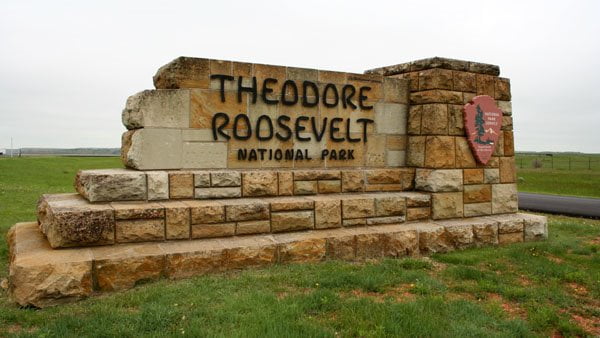
Welcome to Theodore Roosevelt National Park
Welcome to the Theodore Roosevelt National Park Information Page.
Here you will find all you need to know about the natural history of the park.
Learn about the geology, trees, mammals, birds, or other plants and wildlife of the area.
Theodore Roosevelt National Park is located in westcentral North Dakota. The park is separated into north and south units. The North Unit is near Watford City, ND and South Unit is near Medora, ND. The remote Elkhorn Ranch site is between the two units along the Little Missouri River.
Getting Here
The closest major airport to Theodore Roosevelt National Park is Bismark, North Dakota, there are smaller airports at Dickinson & Williston, ND.
From the North
1. Take Highway 85 South to the North Unit of the park.
2. Take Highway 85 South to I-94 West and the South Unit of the park.
From the East
1. Take I-94 West to the South Unit of the park.
2. Take I-94 West to Highway 85 North to the North Unit of the park.
From the South
1. Take I-29 North to I-94 West to the South Unit of the park.
2. Take I-29 North to I-94 West to Highway 85 North to the North Unit of the park.
From the West
1. Take I-94 East to the South Unit of the park.
2. Take I-94 East to Highway 85 North to the North Unit of the park.
Additional Directions
The North and South units are in western North Dakota. The North Unit Visitor Center is located 16 miles south of Watford City along Highway 85. The South Unit Visitor Center is located in Medora, just off I-94 and is 135 miles west of Bismarck, North Dakota. The Painted Canyon Visitor Center is located seven miles east of Medora just off I-94. The distance between Medora at the South Unit and the visitor center in the North Unit is 70 miles via I-94 and Highway 85.
Transportation
To Park
Passenger vehicle is the main mode of transportation. Air service into North Dakota towns of Bismarck, Dickinson and Williston. Bus transportation along I-94. Train service into Williston, North Dakota.
In Park
Personal vehicles, bicycles and charter bus.
Establishment the Theodore Roosevelt National Park
On 10 November 1978, Theodore Roosevelt National Park was given national park status when President Carter signed Public Law 95-625 that changed the memorial park to Theodore Roosevelt National Park. This same law placed 29,920 acres of the park under the National Wilderness Preservation System.
Size and Visitation of Theodore Roosevelt National Park
Total Acreage: 70,446.89
Total Federal: 69,702.12
Total Nonfederal: 744.77
Total Wilderness: 29,920
South Unit / Wilderness: 46,158.57 / 10,510
North Unit / Wilderness: 24,070.32 / 19,410
Elkhorn Ranch: 218.00
Visitation is highest in June, July and August. Visitation is increasing during the shoulder seasons of May and September. Lowest visitation is November to February.
History of Theodore Roosevelt National Park
When Theodore Roosevelt stepped off the train in the Dakota Territory for the first time, he was in search of adventure. The date was 08 Sep 1883, and the town that slept at 2:00 am was Little Missouri, a shoddy collection of buildings on the west bank of the river. The 24-year-old Roosevelt was bursting with anticipation about shooting a bison. A feat the took him 10 days to accomplish. Before returning to New York, just two weeks after he arrived, he entered into a partnership to raise cattle on the Maltese Cross Ranch. The next year he returned to the badlands and started a second open-range ranch, the Elkhorn. Theodore Roosevelt returned again over the next few years to live the life of a cowboy, explore, invigorate his body and to have the Little Missouri Badlands renew his spirit. Theodore Roosevelt wrote: “I would not have been President, had it not been for my experience in North Dakota.”
Today, the colorful North Dakota badlands provides the scenic backdrop to the park which memorializes the 26th president for his enduring contributions to the conservation of our nation’s resources. The area was first established as a Memorial Park in 1947. It gained National Park status in 1978. The Little Missouri River has shaped this 70,448-acre park which is home to a variety of plants and animals.
Accessibility
All visitor centers, wayside exhibits, campground amphitheaters, Maltese Cross Cabin are accessible. Both campgrounds have accessible campsites. First portion of Little Mo Nature Trail is paved. Parking areas at each visitor center for buses and trailers. Pull-outs along park road accommodate longer vehicles. Orientation film shown at Painted Canyon and North Unit visitor centers can be captioned. Printed text is available at the South Unit Visitor Center. Access to the Elkhorn Ranch site may require 4-wheel drive and may be inaccessible at certain times of the year due to weather and road conditions.
Basic Visit Recommendations
Theodore Roosevelt National Park is noted for opportunities to see bison, elk, mule and white-tailed deer, pronghorn antelope, prairie dogs, coyote and other small mammals as well as a variety of birds including golden eagles. Wild (feral) horses can be seen in the South Unit and longhorn steers in the North Unit.
Visiting park visitor centers with museum and orientation films; visiting the Maltese Cross Cabin near the Medora Visitor Center; joining a guided talk or walk or attending evening program; driving scenic park roads; wildlife viewing; bird watching; hiking; and camping are also fun activities to help you enjoy your visit to Theodore Roosevelt National Park.
Biking
All roads in Theodore Roosevelt National Park are open to cyclists. The park roads follow the contours of the badlands allowing riders to enjoy the park close up. Off-road cycling is not allowed in the park. All bicycles must remain on paved or dirt roads.
Bicylists should exercise caution as they ride in the park; they will share the narrow roads with large RVs and other vehicles. Traffic is heaviest in June, July and August and Road shoulders are absent in some places. Bicyclists must obey all traffic laws.
Camping
Theodore Roosevelt National Park has campgrounds in the South Unit and North Unit.
Entrance Fees
Individual Entry (Bike, Foot) $ 5.00 (Seven Day Pass)
Private Non-commercial Vehicle $ 10.00 (Seven Day Pass)
Annual Pass (Good one year from date of purchase) $ 20.00
Gold Access Passport (Blind or permanently disabled) Free (Lifetime – good in all national parks)
Golden Age Passport (One time fee – for those 62+) $ 10.00 (Lifetime – good in all national parks)
Golden Eagle Passport (Good one year from date of purchase) $ 50.00 (Good in all national parks)
Commerical Tour Fees: Bus (26+ capacity) – $150.00, small bus (16-25 capacity) – $60.00, Van (7-15 capacity) – $50.00, Sedan (1-6 passengers) – $25.00 + $5.00 per person.
Golden Access Passport
The Golden Access Passport is a free pass available to all permanent U.S. residents who are eligible to receive federal benefits based on disability, whether or not you are actually receiving them or not. This pass entitles the bearer, and immediate family or accompanying passengers in a private vehicle, to free admission to all U.S. National Parks, Monuments, Forests, and Historic Sites, as well as half price camping. Apply in person at any National Park Service or U.S. Forest Service area.
Food and Supplies
None available within the park; a variety of restaurants and grocery stores are available near the park or within a short drive.
Hiking
There are many hikes in the South Unit and in the North Unit.
Horseback Riding
Theodore Roosevelt National Park is open to horse use. Visitors may bring their own horses or take rides with the park concessioner. The current trail ride operator in the park is Peaceful Valley Ranch/Shadow Country Outfitters. For more information on concessioner trail rides, contact them directly at: 701-623-4568.
Lodging
There is no lodging in the park.
Permits
Persons wishing to camp overnight in the backcountry must register and obtain a free backcountry use permit – entrance fees still apply.
Pet Information
Pets must be confined, tied or on a leash at all times. Pets are not permitted in the backcountry, including all park trails.
Programs
A full compliment of regularly scheduled programs including talks, evening campfire presentations, nature walks and long hikes are offered June – mid-September. Guided tours of Theodore Roosevelt’s Maltese Cross Cabin in summer; self-guided during winter. Ski tours in winter may be offered if snow conditions permit. Educational programs for schools and groups may be scheduled throughout the year.
Skiing & Snowshoeing
The badlands of North Dakota receives about 30 inches of snow a year. Snow can arrive in October and stay until April. The wind tends to blow the snow around quite a bit, leaving some areas bare and others drifted high.
The park does not groom any trails for cross-country skiing. Skiers blaze their own trails through the snow. The best places to cross-country ski are on the frozen Little Missouri River and on closed park roads.
Skiing on park trails can be somewhat difficult. The trails are narrow and many cross creek bottoms. These creek bottoms are like little canyons and may be too steep for safe skiing. They, and all coulees and draws, may also fill up with blowing snow hiding their true depth.
Also be aware of wildlife and keep a safe distance from bison (100 yards minimum).
Call the park for information on snow and river conditions.
Visitor Centers
Medora Visitor Center (South Unit)
Painted Canyon Visitor Center (South Unit)
North Unit Visitor Center
Weather of Theodore Roosevelt National Park
Summers are warm with temperatures in the 80’s and 90’s with a few days into the 100’s. Evenings can be cool. Average maximum: July is 87.1° and August is 86.7°. Average minimum: July 54.5° and August is 52.4°. Annual precipitation is 15 inches. Winters are generally cold. Recommend layers of clothing, especially in spring and fall. Rain gear in spring. Hat for sun protection is needed in summer.
